Here it is, the end of the semester, and summer is upon us. It's sad to think there will be no more classes to look forward too, but I suppose it had to end sometime! I've taking a lot away from the course, and it has especially broadened my interpretations when considering grave goods and individual remains within the grave.
Burial sites can tell us so much more than I ever thought possible about the individual present. Grave goods can give us insight into the buried individual's character, but we must keep in mind that it is a reflection of how the living viewed the dead, and not necessarily an accurate representation of the individual's sense of self. Gender, status, and profession can all be portrayed through grave goods as well as the position of the remains. These can also be shown through the grave location and type. Furthermore, the excavation of burial sites must be carried out with understanding and openness. Anyone associated with the site must be informed and their decisions respected - which is sometimes a hard truth to bare as archaeologists.
I've learned about so many different burial practrices over the course of this semester, it would be impossible to list them all here. As someone who's interested in new cultures, rituals, and practices, this was a highlight for me personally. The course was one of the few that actually got me interested in researching outside of assignments.
So, I think it's safe to say I've learned a lot, and this experience will definitely help me carry on through my future anthropology courses. The group projects were -surprisingly!- not only a great learning opportunity, but also fun! I highly recommend Anth 397: Archaeology of Death!
Monday, 1 April 2013

Sunday, 31 March 2013
Burial of a Natufian Shaman
Natufian culture predates the Early Neolithic period and is known to demonstrate the first emergence of farming communites (Bar-Yosef & Valla 1990:433). Many burial sites have been discovered and excavated in Israel, Jordan, Syria, and Lebanon (Milstein 2008). In 2008 a new grave was discovered, this one of what is believed to be a shaman. I had never heard of this discovered until I stumbled upon it a few days ago which makes me wonder how this find was publicized (if at all) or perhaps I missed the news that day. But back to the details!

Above is a diagram of the shaman grave discovered by Grosman (Milstein 2008). The associated animal remains have been the determining factor in labelling this burial as belonging to that of a shaman, because no other Natufian graves have been discovered with the like (ibid.). The shaman was a woman, 45 years old (ibid.), and while with some confidence we can determine her a shaman, we cannot necessarily explain (with certainty) what rituals the animal remains were used for.
As mentioned, Natufian culture was key in the development of farming communties, but the importance of shamans in this period of transition away from nomadic lifestyle can only be guessed.
For the full report of Grosman's excavation see Grosman, Munro, and Belfer-Cohen 2008.
The animistic nature of the shaman is prevalent in the animal remains that have been placed close to the woman's body. Although the orientation of the body has probably been disrupted due to geological processes, she appears to have been buried in a crouched postion with her legs tucked beneath her. A stone slab was placed on the body (Milstein 2008) perhaps to keep scavengers away or to prevent the shaman's soul from leaving her body (or both).
I find it fascinating that this Natufian burial is the first of its kind to be discovered, and it shows what a dramatic change one site can intiate in our interpretation of long lost cultures.
Bar-Yosef, Ofer and Valla, F.
1990 The Natufian Culture and the Origin of the Neolithic in the Levant. Current Anthropology 31(4):433-436.
Grosman, Leore; Munro, Natalie D.; Belfer-Cohen, Anna
2008 A 12,000-year-old Shaman burial from the southern Levant (Israel). Proceedings of the National Academy of Sciences of the United States of America 105(46):17665-17669. http://www.pnas.org/content/105/46/17665.full (accessed March 31, 2013).
Milstein, Mati
2008 Oldest Shaman Grave Found; Includes Foot, Animal Parts [Internet]. National Geograpic; [cited March 31, 2013]. Available from: http://news.nationalgeographic.com/news/2008/11/081104-israel-shaman-missions.html
Above is a diagram of the shaman grave discovered by Grosman (Milstein 2008). The associated animal remains have been the determining factor in labelling this burial as belonging to that of a shaman, because no other Natufian graves have been discovered with the like (ibid.). The shaman was a woman, 45 years old (ibid.), and while with some confidence we can determine her a shaman, we cannot necessarily explain (with certainty) what rituals the animal remains were used for.
As mentioned, Natufian culture was key in the development of farming communties, but the importance of shamans in this period of transition away from nomadic lifestyle can only be guessed.
For the full report of Grosman's excavation see Grosman, Munro, and Belfer-Cohen 2008.
The animistic nature of the shaman is prevalent in the animal remains that have been placed close to the woman's body. Although the orientation of the body has probably been disrupted due to geological processes, she appears to have been buried in a crouched postion with her legs tucked beneath her. A stone slab was placed on the body (Milstein 2008) perhaps to keep scavengers away or to prevent the shaman's soul from leaving her body (or both).
I find it fascinating that this Natufian burial is the first of its kind to be discovered, and it shows what a dramatic change one site can intiate in our interpretation of long lost cultures.
Bar-Yosef, Ofer and Valla, F.
1990 The Natufian Culture and the Origin of the Neolithic in the Levant. Current Anthropology 31(4):433-436.
Grosman, Leore; Munro, Natalie D.; Belfer-Cohen, Anna
2008 A 12,000-year-old Shaman burial from the southern Levant (Israel). Proceedings of the National Academy of Sciences of the United States of America 105(46):17665-17669. http://www.pnas.org/content/105/46/17665.full (accessed March 31, 2013).
Milstein, Mati
2008 Oldest Shaman Grave Found; Includes Foot, Animal Parts [Internet]. National Geograpic; [cited March 31, 2013]. Available from: http://news.nationalgeographic.com/news/2008/11/081104-israel-shaman-missions.html
Tuesday, 26 March 2013
Celebration of Death and Life
The other day I was looking for inspiration for a topic for my next post when I came across a beautiful photo in the Atlantic 2012: The Year in Photos. (I really have no idea how I managed to happen across these pictures; the mysteries of the internet...). While there are many beautiful and emotional pictures, one in particular caught my eye.

In the description it talked about a practice I had never heard of before: the Quarup (or Kuarup). The Quarup is a giant festival that is head annually in July or August to celebrate and honour the dead. It is practiced by indigenous groups of the Xingu in the Amazon rainforest, and every year the festival brings together many of the different tribes.
The festival is a joyous occasion that involves music, dance, games and food, in addition to traditional rituals. This celebration also includes the celebration of life, and young women who have reached an age eligible for marriage are painted and dressed to be presented to find their future partner.
The dead here are celebrated in the context of the living, not mourned. The tribes of the Xingu honour their dead with joy and future fertility. Unfortunately, in a quick Google search I wasn't able to find very much on this celebration, but hopefully I will get a chance to research it further.
http://www.amazon-rainforest.org/indigenous-tribes.html
In the description it talked about a practice I had never heard of before: the Quarup (or Kuarup). The Quarup is a giant festival that is head annually in July or August to celebrate and honour the dead. It is practiced by indigenous groups of the Xingu in the Amazon rainforest, and every year the festival brings together many of the different tribes.
The festival is a joyous occasion that involves music, dance, games and food, in addition to traditional rituals. This celebration also includes the celebration of life, and young women who have reached an age eligible for marriage are painted and dressed to be presented to find their future partner.
The dead here are celebrated in the context of the living, not mourned. The tribes of the Xingu honour their dead with joy and future fertility. Unfortunately, in a quick Google search I wasn't able to find very much on this celebration, but hopefully I will get a chance to research it further.
http://www.amazon-rainforest.org/indigenous-tribes.html
Thursday, 21 March 2013
Ancestor's Wrath
A few posts ago, I enjoyed writing about the fictional burial practices concerning Dragon Priests (in the Elder Scrolls series), and how the concept of resurrection is protrayed through different aspects of the burial. I kept thinking about other fictional burial practices modeled after those one can find in the real world. One of the other races in the series, the Dunmer, practice a form of ancestor worship.
As far as I can tell, the body is first cremated, then the ashes and remaining fragments of bone are either stored in an urn and kept near the hearth of the home or at a separate little shrine; or, if the family is wealthy, the burnt remains will be displayed openly in raised circles on the floor (mixed with soil?) deep within a family tomb.
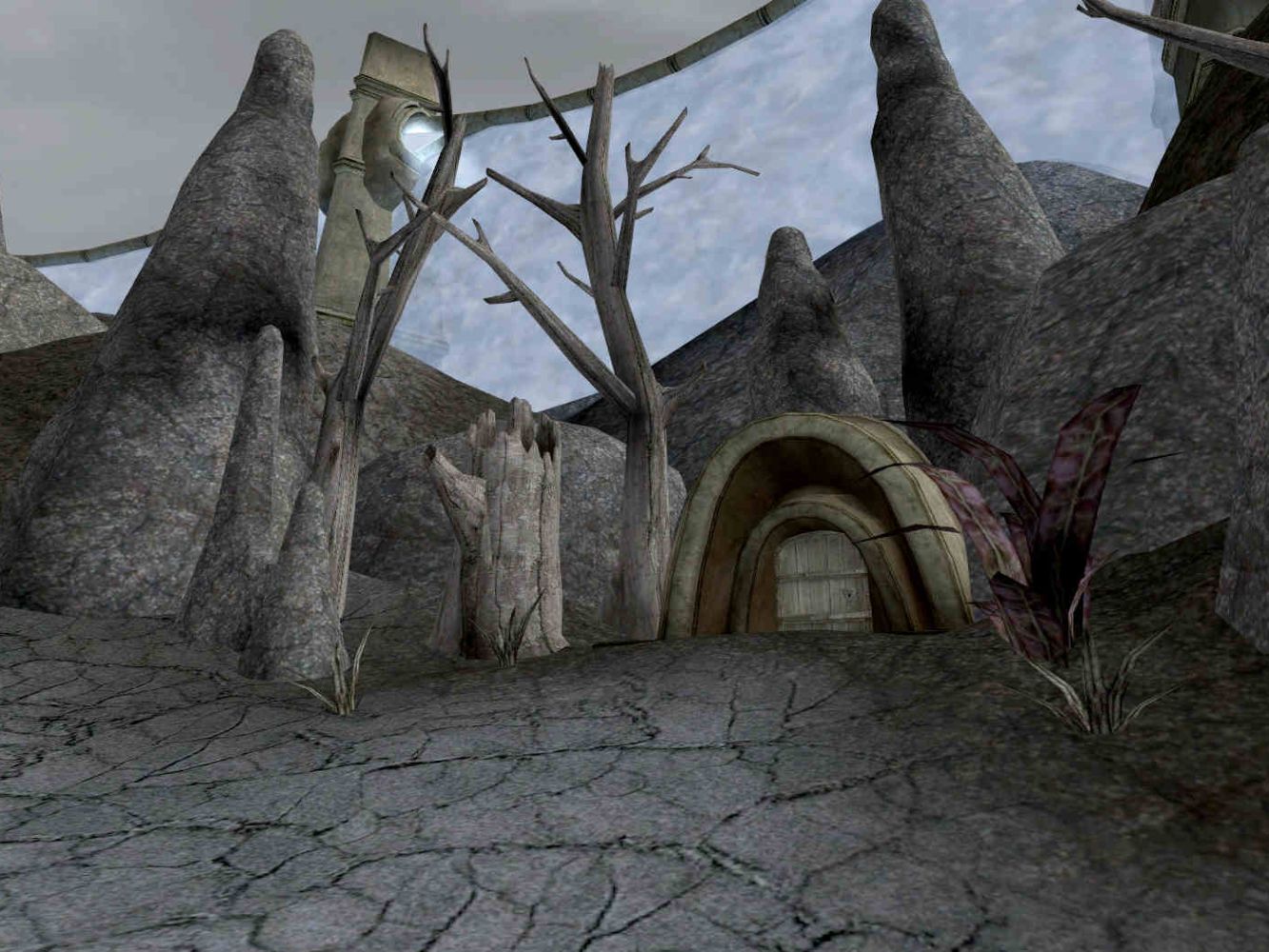
Tombs can house numerous ancestors, some circles grouped within a single chamber, and others dispersed throughout the tomb. The tombs are designed for the living members of the family to visit and interact with the dead. Prayer stools are placed before each circle, and offerings (usually food, herbs, or flowers) are laid upon the raised barrier fencing off the cremated remains. Sometimes chests and lockboxes will be placed nearby in which to place more valuable offerings (gold, weapons, armour) to prevent them from being stolen. Often within the tomb will be a chamber for sermons with numerous benches lined along both sides of the walls.
The dead in this practice are treated as entities that must be appeased to bring good fortune and strength to the entire family. They are risen almost to the status of gods. This reminds me a lot of the worship of the gods of Olympus in Ancient Greece, especially in the giving offerings in exchange for 'blessings' of good fortune in certain endeavors.
I looked up modern practices of ancestor worship and came across a neat little article describing a personal experience of gathering at a family tomb in Okinawa, Japan. It can be found here.
As far as I can tell, the body is first cremated, then the ashes and remaining fragments of bone are either stored in an urn and kept near the hearth of the home or at a separate little shrine; or, if the family is wealthy, the burnt remains will be displayed openly in raised circles on the floor (mixed with soil?) deep within a family tomb.
Tombs can house numerous ancestors, some circles grouped within a single chamber, and others dispersed throughout the tomb. The tombs are designed for the living members of the family to visit and interact with the dead. Prayer stools are placed before each circle, and offerings (usually food, herbs, or flowers) are laid upon the raised barrier fencing off the cremated remains. Sometimes chests and lockboxes will be placed nearby in which to place more valuable offerings (gold, weapons, armour) to prevent them from being stolen. Often within the tomb will be a chamber for sermons with numerous benches lined along both sides of the walls.
The dead in this practice are treated as entities that must be appeased to bring good fortune and strength to the entire family. They are risen almost to the status of gods. This reminds me a lot of the worship of the gods of Olympus in Ancient Greece, especially in the giving offerings in exchange for 'blessings' of good fortune in certain endeavors.
I looked up modern practices of ancestor worship and came across a neat little article describing a personal experience of gathering at a family tomb in Okinawa, Japan. It can be found here.
Monday, 11 March 2013
Burials... in SPACE!
Now, I may be overreacting (many people probably already know about this practice), but I had never heard of this prior to the course when I started to look into burial practices outside the norm. Space burials entail a "symbolic portion" of cremated remains to be launched into Earth's atmosphere, onto the surface of the moon, or into deep space. The clip on http://www.celestis.com/ reveals that the portion of the remains to be taken into space is actually quite small, but I suppose it's more the meaning behind the process anyway.
The cost of this service ranges from $995 (Earth's atmosphere) to $12,500 (deep space); more on this here. Services are performed at the launch site where families can experience what their passed loved ones always dreamed of.
This practice was made all the more intriguing to me in that one of the first few people launched in 1997 was Gene Roddenberry. As a Trekkie I was most excited to learn this. I also find the idea of looking up at the stars at night and knowing that your loved one is somewhere out there, somewhere where they had always dreamed of being, very special and intriguing.
The cost of this service ranges from $995 (Earth's atmosphere) to $12,500 (deep space); more on this here. Services are performed at the launch site where families can experience what their passed loved ones always dreamed of.
This practice was made all the more intriguing to me in that one of the first few people launched in 1997 was Gene Roddenberry. As a Trekkie I was most excited to learn this. I also find the idea of looking up at the stars at night and knowing that your loved one is somewhere out there, somewhere where they had always dreamed of being, very special and intriguing.
Tuesday, 5 March 2013
Burial of a Dragon Priest
As a player of the Elder Scrolls V: Skyrim, I spend a lot of time exploring ancient ruins. I couldn't help but think: what if I was thrown into one of these tombs as an archaeologist? How would I interpret what I found there in the context of burial archaeology? Most importantly, I was interested in how I might go about interpreting the tomb of a Dragon Priest, and what sort of connections could I draw between an anthropological explanation and the lore of the game. (And yes, I'm a total Elder Scrolls nerd and have spent far too many hours on the games - but hey, at least now I'll be putting them to good use!)
Background:
The Dragon Priests were said to rule over Skyrim in the name of the Dragons. When they died, they were buried within ancient tombs and temples in the belief that they would be resurrected upon the prophesied return of Alduin, the 'World Eater' and king of the Dragons. They lived in a time of tyranny, where the Dragons enforced strict obedience of all. This obedience was to be ensured by the priests the Dragons appointed to rule in their name.
Structure of a Typical Tomb:
Tombs belonging to Dragon Priests are vast, multi-chambered, and are often guarded by devices ensuring the protection of the remains and valuable grave goods within. Each chamber is often stocked with urns varying greatly in size and decoration. The contents of these urns, for the most part, have been lost to time suggesting that most contained food or drink. There is often the presence of a large banquet hall nearing the center of the tomb. Storage closets are frequent, and vary in size. They are usually locked, and contain extra supplies such as armor, a few basic weapons, and foodstuffs. One of the most important chambers is one where the embalming takes place. While there are embalming tools spread throughout many of the chambers, most are stored within a smaller sized room with an open table to prepare the remains. This sacred place of preparation was well lit with candles and intricate designs are carved into the floor and walls. The final chamber holds the open sarcophagus of the Dragon Priest. This chamber is by far the largest, and was once a place of worship.

Traps:
There are many complex traps that lie within the tombs, all of which center around turning columns that bear the symbols of animals. While the Dragon Priests are known for their devout worship of the Dragons, they also revered many other animals. Those depicted include: a wolf, dragonfly, whale, eagle, owl, bear, snake, and a fox.
Servants:
The Dragon Priests enforced a strict and brutal law, and demanded obedience above all else. They made slaves out of most of the population, and required those slaves to serve in death as they had in life. The servants were sacrificed to be buried with the Dragon Priest upon his death. There is no differentiation between male and female servants, and each carries a weapon of their own choosing. Several servants were expected to preform daily rituals to sustain the body of the Priest and to one day facilitate the resurrection, but they long since died and are likely buried within the tomb as well. Status is determined by proximity to the Dragon Priest, the most loyal and experienced given resting places the closest to better protect their master. The more prominent of the servants were laid to rest wearing their armor and bearing weapons, whereas the less so were merely wrapped with linen.
Dragon Priest:
The Priest himself, as previously mentioned, was laid within an open sarcophagus in the largest chamber of the tomb. This open space served as a place of worship and respect. The body of the Priest was embalmed and dressed in fine robes adorned with armor crafted of Dragon scales. A large, secured chest nearby the sarcophagus hold the most valuable grave goods belonging to the Priest, yet his most prize possession remains on his person. The most powerful of the Dragon Priests bore great masks of power said to have been enchanted by the Dragons themselves. In death, the mask is placed upon the Priest's face to prevent his soul from leaving his body, trapped to await resurrection.

Interpretation:
The concept of resurrection is key to understanding a Dragon Priests tomb. The bodies of the Priest himself as well as his scores of slaves are all embalmed to preserve their bodies, and they are not interred but laid within alcoves carved into the stone. Some are propped upright as if ready to step out and defend the sanctity of the tomb. All of the bodies are exposed so their resurrection would be as simple as waking from a deep sleep. Upon resurrection, the tomb is equipped with foodstuffs and personal armor and weaponry, so each was ready to serve their Priest and newly returned Dragons.
(I had way too much to say about this...)
Background:
The Dragon Priests were said to rule over Skyrim in the name of the Dragons. When they died, they were buried within ancient tombs and temples in the belief that they would be resurrected upon the prophesied return of Alduin, the 'World Eater' and king of the Dragons. They lived in a time of tyranny, where the Dragons enforced strict obedience of all. This obedience was to be ensured by the priests the Dragons appointed to rule in their name.
Structure of a Typical Tomb:
Tombs belonging to Dragon Priests are vast, multi-chambered, and are often guarded by devices ensuring the protection of the remains and valuable grave goods within. Each chamber is often stocked with urns varying greatly in size and decoration. The contents of these urns, for the most part, have been lost to time suggesting that most contained food or drink. There is often the presence of a large banquet hall nearing the center of the tomb. Storage closets are frequent, and vary in size. They are usually locked, and contain extra supplies such as armor, a few basic weapons, and foodstuffs. One of the most important chambers is one where the embalming takes place. While there are embalming tools spread throughout many of the chambers, most are stored within a smaller sized room with an open table to prepare the remains. This sacred place of preparation was well lit with candles and intricate designs are carved into the floor and walls. The final chamber holds the open sarcophagus of the Dragon Priest. This chamber is by far the largest, and was once a place of worship.
Traps:
There are many complex traps that lie within the tombs, all of which center around turning columns that bear the symbols of animals. While the Dragon Priests are known for their devout worship of the Dragons, they also revered many other animals. Those depicted include: a wolf, dragonfly, whale, eagle, owl, bear, snake, and a fox.
Servants:
The Dragon Priests enforced a strict and brutal law, and demanded obedience above all else. They made slaves out of most of the population, and required those slaves to serve in death as they had in life. The servants were sacrificed to be buried with the Dragon Priest upon his death. There is no differentiation between male and female servants, and each carries a weapon of their own choosing. Several servants were expected to preform daily rituals to sustain the body of the Priest and to one day facilitate the resurrection, but they long since died and are likely buried within the tomb as well. Status is determined by proximity to the Dragon Priest, the most loyal and experienced given resting places the closest to better protect their master. The more prominent of the servants were laid to rest wearing their armor and bearing weapons, whereas the less so were merely wrapped with linen.
Dragon Priest:
The Priest himself, as previously mentioned, was laid within an open sarcophagus in the largest chamber of the tomb. This open space served as a place of worship and respect. The body of the Priest was embalmed and dressed in fine robes adorned with armor crafted of Dragon scales. A large, secured chest nearby the sarcophagus hold the most valuable grave goods belonging to the Priest, yet his most prize possession remains on his person. The most powerful of the Dragon Priests bore great masks of power said to have been enchanted by the Dragons themselves. In death, the mask is placed upon the Priest's face to prevent his soul from leaving his body, trapped to await resurrection.
Interpretation:
The concept of resurrection is key to understanding a Dragon Priests tomb. The bodies of the Priest himself as well as his scores of slaves are all embalmed to preserve their bodies, and they are not interred but laid within alcoves carved into the stone. Some are propped upright as if ready to step out and defend the sanctity of the tomb. All of the bodies are exposed so their resurrection would be as simple as waking from a deep sleep. Upon resurrection, the tomb is equipped with foodstuffs and personal armor and weaponry, so each was ready to serve their Priest and newly returned Dragons.
(I had way too much to say about this...)
Tuesday, 26 February 2013
Letting Go of Preconceived Notions...
First homosexual caveman found - The Telegraph
The oldest gay in the village: 5,000-year-old is 'outed' by the way he was buried - Mail Online
Has the first gay caveman been unearthed? - The Globe and Mail
Really? I mean... really??
I had three reactions when I first heard about this in class: 1) is this serious? 2) where's the evidence? and 3) where does sexual orientation come into this? It wasn't until later that these wild claims were 'toned down' in:
'Gay Caveman' Story Overblown, Archaeologists Say - Live Science
and
Gay caveman probably not gay or a caveman - National Post
The implications of these labels are ridiculous, but I have to hand it to the media, at the very least it seems to have generated a public interest in archaeological discovery - which is often difficult to accomplish. However, I believe interest can be generated in more appropriate ways, and be more accurate as to the facts.
The discovery was of a male skeleton buried in a traditionally female position (on his left side with his head facing west (the Globe and Mail appears to have made a mistake and says East... )). The grave goods were not gender-specific, although there appears to be differing reports of different grave goods in each article...
This issue, for me, brings up the importance of differentiating between sex, gender, and sexual orientation. Sex is biologically determined, gender is a cultural construct, and sexual orientation is the individual practice of sexuality. To understand the grave of this coined 'gay caveman' we have to realize that first of all, determining the sex of a skeleton is by no means exact and open to subjective interpretation. Gender is dictated by culture, and thus, portrayed differently across cultures - what we understand to be culturally male and culturally female is by no means the same as what was thought in 2,500 BC and we should not use our own preconceived notions to determine the gender of ancient remains. Finally, sexual orientation is personal to the individual and may or may not be openly expressed or accepted in the individual's culture, let alone revealed in the archaeological record.
In conclusion, I believe its important to separate ourselves from our ideas of gender. The 'gay caveman' is not a caveman, and there is no direct evidence to conclusively state that he was gay. There are many other explanations to account for the irregularities of this particular burial including: he was of a 3rd gender, those that buried him had different reasons for altering the way he was buried, or maybe the initial interpretation of the skeleton as male was incorrect. I hope that one day we can disassociate from our own cultural understanding of sex, gender, and sexual orientation and view ancient burials in their own cultural context.
The oldest gay in the village: 5,000-year-old is 'outed' by the way he was buried - Mail Online
Has the first gay caveman been unearthed? - The Globe and Mail
Really? I mean... really??
I had three reactions when I first heard about this in class: 1) is this serious? 2) where's the evidence? and 3) where does sexual orientation come into this? It wasn't until later that these wild claims were 'toned down' in:
'Gay Caveman' Story Overblown, Archaeologists Say - Live Science
and
Gay caveman probably not gay or a caveman - National Post
The implications of these labels are ridiculous, but I have to hand it to the media, at the very least it seems to have generated a public interest in archaeological discovery - which is often difficult to accomplish. However, I believe interest can be generated in more appropriate ways, and be more accurate as to the facts.
The discovery was of a male skeleton buried in a traditionally female position (on his left side with his head facing west (the Globe and Mail appears to have made a mistake and says East... )). The grave goods were not gender-specific, although there appears to be differing reports of different grave goods in each article...
This issue, for me, brings up the importance of differentiating between sex, gender, and sexual orientation. Sex is biologically determined, gender is a cultural construct, and sexual orientation is the individual practice of sexuality. To understand the grave of this coined 'gay caveman' we have to realize that first of all, determining the sex of a skeleton is by no means exact and open to subjective interpretation. Gender is dictated by culture, and thus, portrayed differently across cultures - what we understand to be culturally male and culturally female is by no means the same as what was thought in 2,500 BC and we should not use our own preconceived notions to determine the gender of ancient remains. Finally, sexual orientation is personal to the individual and may or may not be openly expressed or accepted in the individual's culture, let alone revealed in the archaeological record.
In conclusion, I believe its important to separate ourselves from our ideas of gender. The 'gay caveman' is not a caveman, and there is no direct evidence to conclusively state that he was gay. There are many other explanations to account for the irregularities of this particular burial including: he was of a 3rd gender, those that buried him had different reasons for altering the way he was buried, or maybe the initial interpretation of the skeleton as male was incorrect. I hope that one day we can disassociate from our own cultural understanding of sex, gender, and sexual orientation and view ancient burials in their own cultural context.
Sunday, 10 February 2013
The Final Choice
The topic of one's own death is unsettling to say the least, yet it's interesting to consider. When the question was first posed as a topic, I admit I was at a loss as to an answer. What do I want done with my body after I'm gone? I tried to break it down into three factors: what will be done with my body, what type of funeral, and what kind of grave marker?
It would be great if I could donate my organs to those in medical need, yet preferably I'll live a very long life which would mean my organs may not be in the best condition for such a thing. So in that case, how about donating my body for science? (Insert 'For Science' meme here.)

 Upon completing the required paperwork, you can agree to a full body donation, or a partial one, but not both. You can also specifically donate your brain to facilities that study mental health. There is a nice little article that describes the medical uses of donating ones body found here, it's not the most scientific but it's an easy read and gives a general overview. However, you can also donate your body to other scientific purposes, such as Gunther von Hagens' Body Worlds. I personally would prefer to donate my body specifically for education in medical training. For reasons that I find hard to explain, I would not wish to have my body 'posed' for public display. I recognize the educational value, but I still find it rather impersonal and I still would like to be considered a person instead of a 'specimen'.
So what then are my other options? How about a traditional Western burial, one of the most, if not the most common practice: interment. There is something very connected about burial within a cemetery, especially when you know that you will be surrounded by your closest family. Then again, I find being dolled up, placed in a sealed coffin, then placed into the ground a bit... unnatural. Ideally, I would like to be placed in the ground without a coffin, however to human body is too toxic for this to be possible. To make up for this there is a relatively recent practice that is rising in popularity: green burials. The effort of simplifying the burial procedure to better the environment, however, is ironically rather complex.

Overall, I'm drawn to cremation, and to have my ashes cast out into the ocean. For those that know me, I have somewhat of an obsession with ships, nautical gadgets, and the feeling of being surrounded by ocean on all sides. What could be more perfect than finally becoming one with the sea? The drawback in this, for me, would be that no physical trace of my remains would be left with my family. Would it be possible to spread some of my ashes in the ocean, and bury the rest next to my family in a quiet cemetery with a little plaque?
Such a decision about what I should do with my body, I feel should not be made quickly. The choice will affect how you are remembered and seen by family and strangers. My preference right now will not necessarily be the same as in the future when I have graduated and have a job and family of my own. So the answer to my 'final choice' would be: 'Has yet to be determined.'
It would be great if I could donate my organs to those in medical need, yet preferably I'll live a very long life which would mean my organs may not be in the best condition for such a thing. So in that case, how about donating my body for science? (Insert 'For Science' meme here.)
Upon completing the required paperwork, you can agree to a full body donation, or a partial one, but not both. You can also specifically donate your brain to facilities that study mental health. There is a nice little article that describes the medical uses of donating ones body found here, it's not the most scientific but it's an easy read and gives a general overview. However, you can also donate your body to other scientific purposes, such as Gunther von Hagens' Body Worlds. I personally would prefer to donate my body specifically for education in medical training. For reasons that I find hard to explain, I would not wish to have my body 'posed' for public display. I recognize the educational value, but I still find it rather impersonal and I still would like to be considered a person instead of a 'specimen'.So what then are my other options? How about a traditional Western burial, one of the most, if not the most common practice: interment. There is something very connected about burial within a cemetery, especially when you know that you will be surrounded by your closest family. Then again, I find being dolled up, placed in a sealed coffin, then placed into the ground a bit... unnatural. Ideally, I would like to be placed in the ground without a coffin, however to human body is too toxic for this to be possible. To make up for this there is a relatively recent practice that is rising in popularity: green burials. The effort of simplifying the burial procedure to better the environment, however, is ironically rather complex.
Overall, I'm drawn to cremation, and to have my ashes cast out into the ocean. For those that know me, I have somewhat of an obsession with ships, nautical gadgets, and the feeling of being surrounded by ocean on all sides. What could be more perfect than finally becoming one with the sea? The drawback in this, for me, would be that no physical trace of my remains would be left with my family. Would it be possible to spread some of my ashes in the ocean, and bury the rest next to my family in a quiet cemetery with a little plaque?
Such a decision about what I should do with my body, I feel should not be made quickly. The choice will affect how you are remembered and seen by family and strangers. My preference right now will not necessarily be the same as in the future when I have graduated and have a job and family of my own. So the answer to my 'final choice' would be: 'Has yet to be determined.'
Saturday, 12 January 2013
Of Analogies and Nightmares
In class we were recently given a conversation from an archaeology archive and a following blog post that was written in response. The conversation was between Ramilisonina (Madagascar archaeologist) and a journalist about possible links between megaliths in Madagascar and Stonehenge. The idea perked my interest and I set about trying to find out more about Stonehenge because I personally don't know very much about the subject. (Let me mention that if I misstep here concerning any evidence please let me know.)

First of all, let me say that the matter of Stonehenge is a nightmare. Anyone who has tried to locate valid information on the internet about its purpose will support me on this - or maybe it's just me?? There are so many different theories that it's impossible to sift through them all in order to get at legitimate information. To further add to the confusion, each proposal is backed with very passionate arguments and posited as fact. But I digress...
Taking the information that I gathered (with a bit more than a grain of salt), I reread both the article, and the blog post. I do believe that analogy is extremely useful in anthropology and gives new perspectives that otherwise may not have come to light. These analogies however must be made carefully because in anthropology context is everything. Customs of different regions may be similar but they will never be identical because they were born out of different cultures. I believe the key with analogies is to identify the possibilities.
So concerning the interview with Ramilisonina, I think it's really interesting to consider similarities between Stonehenge (Woodhenge & Bluestonehenge included) and the megaliths of Madagascar. Thus, I appreciate the subject of the interview and his theories concerning the connections, yet my problem lies more with the technical aspect of it. First of all, he has answered some massive questions within 1-4 sentences which (to me), simplifies the issue too much. I am left wondering if his answers were purposely brief, shortened by the journalist, or directed at a specific audience that has little knowledge of the subject.
Secondly, the interview begins by describing possible connections, yet in later questions they are applied as indisputable fact. At first Stonehenge "seems to commemorate the dead" and then suddenly Stonehenge represents the dead, Woodhenge represents the living, and Bluestonehenge was a place of preparation of the dead. I feel like I've missed something...
Moving onto the responsive blog post, I believe the author dismissed the possibilities too quickly. I personally don't believe that the age of a practice influences the thought process behind it. Just because something is developed now, doesn't mean the thought process didn't exist in the past. For all we know, the builders of Stonehenge (and other '-henges') also associated stone with death, and wood with life.
Furthermore, the author plays down the difficulty in anthropology/archaeology of discovering the purpose of ancient monuments. You have to start somewhere in order to build a workable theory. He writes about the theory of the connection of Stonehenge with the megaliths of Madagascar as if they were written in stone. Does he believe that it's a bad analogy, or does he personally not see a worthwhile connection?
To sum up, I believe that analogies are not only interesting to consider, but also extremely important in highlighting possible behavioral patterns. However, in order to make an analogy between two cultural practices, context must be kept in mind; similar practices can evolve from entirely different thought processes. Also I thought I would mention in my sifting through information on the web about Stonehenge I stumbled upon this site. It seems that the Stonehenge Riverside Project and Prof. Mike Parker Pearson have moved onto a new theory that Stonehenge was built as a means of unification.
First of all, let me say that the matter of Stonehenge is a nightmare. Anyone who has tried to locate valid information on the internet about its purpose will support me on this - or maybe it's just me?? There are so many different theories that it's impossible to sift through them all in order to get at legitimate information. To further add to the confusion, each proposal is backed with very passionate arguments and posited as fact. But I digress...
Taking the information that I gathered (with a bit more than a grain of salt), I reread both the article, and the blog post. I do believe that analogy is extremely useful in anthropology and gives new perspectives that otherwise may not have come to light. These analogies however must be made carefully because in anthropology context is everything. Customs of different regions may be similar but they will never be identical because they were born out of different cultures. I believe the key with analogies is to identify the possibilities.
So concerning the interview with Ramilisonina, I think it's really interesting to consider similarities between Stonehenge (Woodhenge & Bluestonehenge included) and the megaliths of Madagascar. Thus, I appreciate the subject of the interview and his theories concerning the connections, yet my problem lies more with the technical aspect of it. First of all, he has answered some massive questions within 1-4 sentences which (to me), simplifies the issue too much. I am left wondering if his answers were purposely brief, shortened by the journalist, or directed at a specific audience that has little knowledge of the subject.
Secondly, the interview begins by describing possible connections, yet in later questions they are applied as indisputable fact. At first Stonehenge "seems to commemorate the dead" and then suddenly Stonehenge represents the dead, Woodhenge represents the living, and Bluestonehenge was a place of preparation of the dead. I feel like I've missed something...
Moving onto the responsive blog post, I believe the author dismissed the possibilities too quickly. I personally don't believe that the age of a practice influences the thought process behind it. Just because something is developed now, doesn't mean the thought process didn't exist in the past. For all we know, the builders of Stonehenge (and other '-henges') also associated stone with death, and wood with life.
Furthermore, the author plays down the difficulty in anthropology/archaeology of discovering the purpose of ancient monuments. You have to start somewhere in order to build a workable theory. He writes about the theory of the connection of Stonehenge with the megaliths of Madagascar as if they were written in stone. Does he believe that it's a bad analogy, or does he personally not see a worthwhile connection?
To sum up, I believe that analogies are not only interesting to consider, but also extremely important in highlighting possible behavioral patterns. However, in order to make an analogy between two cultural practices, context must be kept in mind; similar practices can evolve from entirely different thought processes. Also I thought I would mention in my sifting through information on the web about Stonehenge I stumbled upon this site. It seems that the Stonehenge Riverside Project and Prof. Mike Parker Pearson have moved onto a new theory that Stonehenge was built as a means of unification.
Thursday, 10 January 2013
Let's Get Started...
Hey Everyone!
First of all, introductions are in order... I'm in my fourth year of a Anthropology major and Greek and Roman studies minor. I love archaeology to the point where I have to restrain myself when I sign up for more courses as I believe I maxed out my required archaeology courses quite some time ago. When I saw Archaeology of Death 397 as an available option my willpower cracked and here I am.
So this blog will contain various musings and interesting (at least to me) thoughts about the many beliefs and customs surrounding the separation of the dead from the living. I'm very excited about this course. To top it off, we started with reading an eyewitness account of a funeral of a Rus! As one that takes Slavic studies on the side I naturally thought this was really interesting. At that point I realized I was destined to take this course.
I've been stuck with a lot of other anthropology courses lately, which were interesting but my interests lie more with the archaeology side of things and how cultural identity can be revealed through material remains. In this course I hope to learn more about different practices concerning the dead. Definitely looking forward to the classes to come!
- Meg.
First of all, introductions are in order... I'm in my fourth year of a Anthropology major and Greek and Roman studies minor. I love archaeology to the point where I have to restrain myself when I sign up for more courses as I believe I maxed out my required archaeology courses quite some time ago. When I saw Archaeology of Death 397 as an available option my willpower cracked and here I am.
So this blog will contain various musings and interesting (at least to me) thoughts about the many beliefs and customs surrounding the separation of the dead from the living. I'm very excited about this course. To top it off, we started with reading an eyewitness account of a funeral of a Rus! As one that takes Slavic studies on the side I naturally thought this was really interesting. At that point I realized I was destined to take this course.
I've been stuck with a lot of other anthropology courses lately, which were interesting but my interests lie more with the archaeology side of things and how cultural identity can be revealed through material remains. In this course I hope to learn more about different practices concerning the dead. Definitely looking forward to the classes to come!
- Meg.
Subscribe to:
Posts (Atom)